Thursday, September 27, 2018

Oneisomw Reef Owners Commit to Resource Management

(Chuuk, FSM)

On Friday, September 14th 2018, the municipality of Oneisomw in Chuuk took a major step towards protecting their marine resources through traditional reef owners signing of a Memorandum of Understanding. The MOU pledged to place several reefs into a protected area network of no-take zones. This event underpins the commitment of Oneisomw’s traditional resource owners in working with the state and national government to ensure protection and management of both public and privately owned areas of biological significance which is essential for the sustainable development of the nation, state, and community.

Oneisomw is one of nine islands within the Faichuuk region in the Chuuk State lagoon. Chuuk in the Federated States of Micronesia has some of the most extensive coral reefs and among the highest fish biomass in Micronesia (Houk et all. 2015). Chuuk’s population is highly dependent on these reefs for subsistence and economic benefit (i.e. commercial fishing).

Since 2012, Oneisomw has been working with the Chuuk Conservation Society, The Nature Conservancy, Micronesia Conservation Trust, and the University of Guam Marine Lab in developing comprehensive plans that can assist and support the community in better stewarding resources. This process spanning several years of committed work showcases the importance of coordination and collaboration amongst various entities culminating in achieving shared goals. The PAN is just one strategy identified in Oneisomw's holistic fisheries management plan. Other strategies identified that address fisheries are banning nighttime spearfishing, net size limits, and fish size limits.

This bright spot brings the FSM that much closer – one Community at a time, one State at a time – to achieving its goals linked to the United Nations Sustainable Development Goals (SDG) platform, specifically SDG 1,2,3,5-13, 14, and 15 – commitment to the UNCBD Program of Work for Protected Areas and the UNFCCC’s ecosystem/community-based adaptation.

Finally, through the MOU endorsement, Oneisomw’s marine PAN will become the first site legally declared under the Chuuk State’s PAN law, thereby making it eligible to receive funding from the Micronesia Challenge Endowment Fund once the FSM puts in place a National PAN Policy Framework.

Reef owners signing MOU and witnessed by partner organizations: Marcelus Akapito - Chuuk Conservation Society, William Kostka - Micronesia Conservation Trust, and Ricky Carl - The Nature Conservancy, Micronesia Program

Friday, June 8, 2018


Setting the Foundation for Sustainable Water Resource

(Pohnpei, FSM)

 
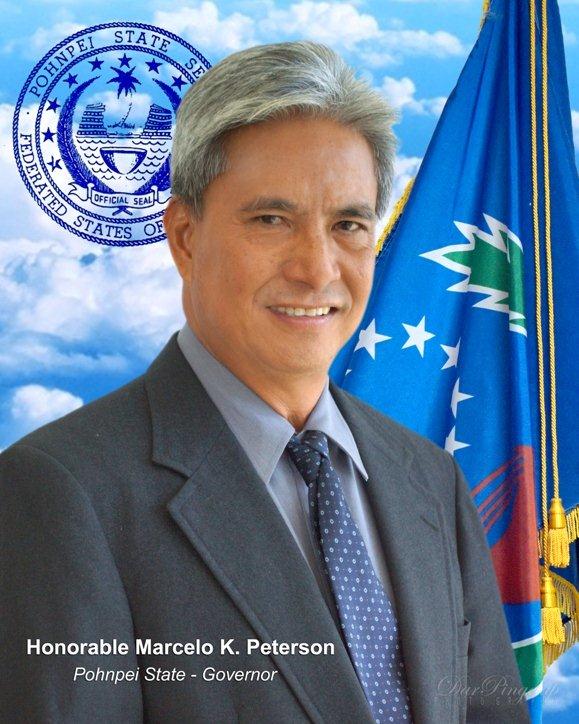
On Thursday, 17 May 2018, Pohnpei State Governor, Marcelo Peterson, signed into public policy the ‘Pohnpei State Water Policy’. This policy sets the foundation for the sustainable use and conservation of water resources, and it creates the enabling framework for the equitable distribution of water. A few key items that make this policy extraordinary:

  • It recognizes the distinct difference between the way water management must take place on high islands and atolls. The distinctions include:
    • On the main island of Pohnpei - upgrade the design of the Nett watershed Water Fund and promote the mechanism for watershed management to support the provision of water.
    • Pohnpei atolls and outer islands – promote community water distribution systems and innovative water supply and sanitation technologies.
  • It identifies the need for a holistic approach to water management and distribution.
  • It expands water management and maintenance to include watersheds and the conservation of critical ecosystem services.
  • It brings the FSM that much closer – one State at a time - to achieving its goals linked to the United Nations Sustainable Development Goals (SDG) platform, specifically SDG 6 – Clean water & Sanitation.

This achievement was made possible through great partnerships and collaboration between the Pohnpei State Government, Pohnpei State Environmental Protection Agency (EPA), and partner organizations; namely, Pohnpei Utilities Corporation(PUC), Helmholtz Centre for Environmental Research (UFZ), Micronesia Conservation Trust (MCT), the Conservation Society of Pohnpei (CSP), United State Department of Agriculture and Natural Resource Conservation Services (USDA-NRCS), International Organization for Migration (IOM), the communities of Nett Municipality and Pakin Atoll, and The Nature Conservancy (TNC).
Technical support was funded by the German Federal Ministry for the Environment, Nature Conservation and Nuclear Safety through BMU-IKI, and the FSM Ridge to Reef Project, funded by the Global Environment Facility (GEF) through the United Nations Development Programme (UNDP).  

 
“This water policy is hereby adopted and will serve to guide Pohnpei State’s collective effort to improve the quantity, quality and access to its abundant freshwater supply. The same will also serve to guide our collective effort to protect, preserve, manage, and conserve our freshwater sources for present and future generations.” 
~ Honorable Marcelo K. Peterson, Pohnpei State Governor

Governor Peterson endorsing the water policy and witnessed by Pohnpei State Environmental Protection Agency Director, Henry Susaia (Photo credit: Francisco Celestine, Pohnpei EPA)


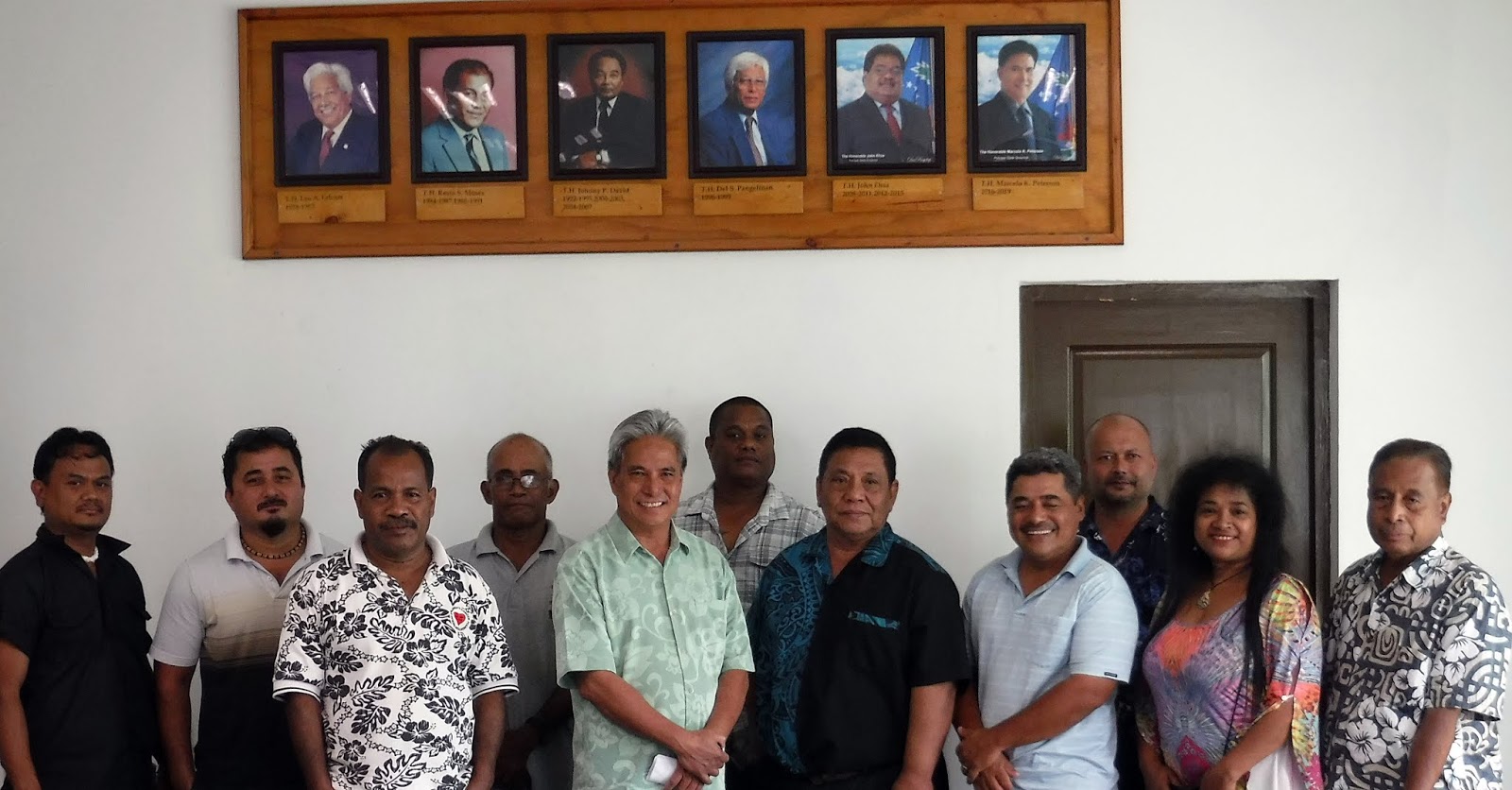
Water Policy endorsement ceremony witnesses

Wednesday, November 8, 2017


Engaging Chuuk stakeholders in PAN spatial planning workshop


(Chuuk, FSM) With the recent enactment of the Chuuk State Protected Areas Network (PAN) Law, it was most timely for the PAN spatial planning to take off in Chuuk from Oct. 30th to Nov. 1st 2017. The Nature Conservancy along with partners from the University of Guam, James Cook University, and the Chuuk Conservation Society led a 3-day workshop that was well attended by over 70 participants including the mayors from almost every municipality within Chuuk lagoon and some from the out-laying islands. The participants were very engaged, asked great questions and were eager to learn more about how they can set up protected areas within their municipalities. Discussions also revolved around how to implement fisheries management in Chuuk which generated great interest by the participants to pursue further. A Marxan analysis (a conservation ranking tool) will be produced as a result of the workshop and provided to the Chuuk stakeholders to help inform on the best ways to design their protected areas for maximum benefits for fishing. Workshop results will also be utilized by the Chuuk Division of Marine Resources and the Chuuk Conservation Society in devising next steps for the ongoing GEF Ridge to Reef project for Chuuk State which is currently working in prioritized sites for Chuuk.


For more information on the workshop results, you may contact Liz Terk at eterk@tnc.org or Marz Akapito at markapito@gmail.com.
Chuuk PAN Spatial Planning group photo, October 2017

Replicating Kitti with Participatory 3D Model  Map Kitti community members with Nate Peterson and Michael Aulerio of TNC (Pohnpei, F...